|
RenewingMinds
|

Who is Phil Johnson?
From time-to-time, we receive email asking about Phil Johnson's widely-repeated comments regarding the late Miles Stanford and his writings. Rather than retype details over and over, the following background piece has been made available.
 Phillip
R. Johnson (1953- ) is editor and keeper of a large volume of Reformed
Baptist material entitled Phil Johnson's Web site,
as well as all things
PyroManiac.
Theologically, "Phil is a committed Calvinist—with a decidedly Baptistic bent."
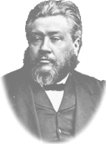
Understandably, his claim explains his love for the cigar-puffing British baptist preacher,
Charles Haddon Spurgeon (1834-1892), pictured below.
Phillip
R. Johnson (1953- ) is editor and keeper of a large volume of Reformed
Baptist material entitled Phil Johnson's Web site,
as well as all things
PyroManiac.
Theologically, "Phil is a committed Calvinist—with a decidedly Baptistic bent."
Understandably, his claim explains his love for the cigar-puffing British baptist preacher,
Charles Haddon Spurgeon (1834-1892), pictured below.
The Rev. Spurgeon extensively read and loved the seventeenth-century Puritan writers, and was like those he admired, covenant rather than dispensational in perspective. Phil Johnson is similarly committed to the Puritan perspective.
 Make
no mistake, brother Spurgeon possessed an appealing passion and doctrinal vigor
which set him apart from many apostates in his generation. He soundly
expounded upon the sovereignty of God and his devotional writings sit on shelves
across the denominational spectrum. However, it was Spurgeon who was known
to regularly denigrate the original Plymouth Brethren's emphasis on the "heavenly"
with the
mocking statement "Ye men of Plymouth, why stand ye looking up into heaven?"
-- an acerbic wordplay on Acts 1:11.
Make
no mistake, brother Spurgeon possessed an appealing passion and doctrinal vigor
which set him apart from many apostates in his generation. He soundly
expounded upon the sovereignty of God and his devotional writings sit on shelves
across the denominational spectrum. However, it was Spurgeon who was known
to regularly denigrate the original Plymouth Brethren's emphasis on the "heavenly"
with the
mocking statement "Ye men of Plymouth, why stand ye looking up into heaven?"
-- an acerbic wordplay on Acts 1:11.
Phil is also the executive director for John MacArthur's tape, radio, and web ministry, Grace to You. Writing in the third person, he says, "Phil has been closely associated with John MacArthur since 1981 and edits most of MacArthur's major books." He is also an elder at Grace Community Church in Panorama City, CA, (MacArthur's church) as well as a trustee of The Martyn Lloyd-Jones Recordings Trust in England. Phil also teaches courses in writing and editing at The Master's College and Seminary (founded by MacArthur).
Phil's educational background includes an amalgamation of religious and secular courses, including a "fundamental Baptist school" and a degree from Moody Bible Institute. While Phil has a great sense of humor, he unfortunately plays the role of editorial "pundit" with the bent, in his own words, to "write opinions that would infuriate other people."
Phil Johnson initially made the decision to place my article THE UNHOLY ALLIANCE in his Bad Theology section, next to heretics: Benny Hinn, Witness Lee, Charles Finney, etc., (the comment was later withdrawn) and to label Miles Stanford an "antinomian hyper-dispensationalist", (later changed to "ultra-dispensationist," but then deleted altogether). Both entries were grossly inaccurate and distortion of long published positions. Rather than thoughtful commentary and clarity, his comments bore resemblance to tacits drawn from Sal Alinsky Rules for Radicals.
From his hard Reformed perspective, Phil claimed John MacArthur's "leaky" brand of so-called "dispensationalism" was at the center of the dispensational spectrum. He labeled "original" 19th century dispensationalism as "bizarre" and full of "arcane idiosyncrasies." For those familiar with politics, the tactic of redefining the scale to make your candidate appear "moderate," is effective for characterizing your opponent as extreme and marginalizing his efforts and success.
Being a graduate of Moody and laying claim to theological expertise, Phil should be knowledgeable enough to know that historic Mid-Acts dispensationalism (commonly referred to as hyper, ultra, or post-Acts 2 dispensationalism) is descriptive of only those who posit two separate churches [Jew and Gentile] in Acts, with the separate Gentile church beginning with Paul sometime after Pentecost, either in Chapter 9, 13, or 28.
However, historic dispensationalism (including Miles Stanford) has long held to the view of one Body of Christ which began on the Day of Pentecost (Acts 2), comprised of both Jews and Gentiles, and translated at the Rapture. Accordingly, Dr. L. S. Chafer, founder of Dallas Theological Seminary, would qualify for Phil's label of "ultra-dispensational" as well. Sadly, this categorization amounts to false witness and Phil's efforts to redefine long-standing terminology appears a postmodernist ploy to obscure John MacArthur's drift from the dispensationalism of the IFCA to the Covenant/Reformed/Puritan camp.
Phil further attempts to cast aspersion on Pauline dispensationalism by writing, "According to Stanford, Paul preached a new message of grace that had never before been proclaimed by anyone, including Christ." This is both accurate and inaccurate. While Miles Stanford and all true dispensationalists acknowledge the existence of grace in every dispensation, they nevertheless acknowledge Paul's unique revelation of "mysteries" to include the Church--the Body of Christ as separate and distinct from Israel and the believer's identification with Christ in His death, burial, resurrection, ascension, and position in Heaven. See our definition of Classic Pauline Dispensationalism. The Apostle Paul did in fact communicate new revelation (Gal. 1:11,12) just as the Lord Jesus Christ had promised in John 16:12-14. These are long-understood defining marks of Dispensationalism--marks despised and viewed with contempt by Phil Johnson.
A reader sent me the following informative quotation made by Phil Johnson in an online theological discussion group:
MacArthur calls himself a "leaky dispensationalist"--meaning he rejects any and all "dispensational" soteriological innovations, holding to classic Reformed (i.e., Protestant, not "covenantal") soteriology. MacArthur's "dispensationalism" is eschatological and ecclesiological only. And given the fact that soteriology is central to our whole understanding of Christianity, whereas eschatology and ecclesiology deal primarily with secondary doctrines, it would be my assessment that MacArthur has far less in common with Ryrie than he would have with anyone who believes 1) that God's grace is efficacious for regeneration and sanctification as well as for justification, and 2) that God graciously guarantees the perseverance of all true believers.
Only a handful of readers will immediately grasp the significance or magnitude of the above statement. For years, John MacArthur has outwardly expressed agreement with 'non-leaky' dispensationalism by signing the Doctrinal Statement of the IFCA (Independent Fundamental Churches of America), while apparently concealing his objections and disagreement with its clear (see Item #8) so-called "soteriological innovations." Why the prevarication? Why did John MacArthur mislead the membership of the IFCA by not divulging his "classic Reformed" soteriology? And why have he and Phil become so vicious toward Miles Stanford and his effort to make this fact (which Phil acknowledges is true) known to the IFCA membership?
More than a few readers have seen through Phil Johnson. He has caustically criticized Miles Stanford for being a "self-appointed guardian of dispensational truth, known for his exposés of just about every well-known evangelical leader." But what of the nature of Phil's web sites? Is there not some contradiction, some extreme hypocrisy here? Is not Phil acting as an identical "guardian" in providing readers with exposés--nearly 200+ critiques on just about every religious group and individual on the Christian spectrum? Further, search high or low and you will not find any mention or reference to his own "appointment" to exercise such judgment. Is not Phil Johnson's criticism of Miles Stanford blatantly hypocritical? Consider Phil's statement in early 2006.
"It would be a serious mistake to imagine that a private meeting is always a mandatory prerequisite before any Christian can legitimately express public criticism of another believer's published work or public behavior. On the contrary, sometimes—especially when we're dealing with a public and scandalous transgression—open rebuke may be warranted as a first response (cf. Galatians 2:11-14). Matthew 18:15-17 outlines instructions for dealing with private sins and personal offenses. These are not guidelines for dealing with false teaching or public behavior that might cloud the truth of the gospel or besmirch the reputation of the whole church." Phil Johnson (2/3/2006 Pyromaniacs blog)
Phil Johnson appears irritated by the fact that during the decade of the 1990s, Miles Stanford produced several exposés on the doctrinal drift and perceived errors of John MacArthur--aberrations which were identified and carefully documented within the various editions of MacArthur's major books and tapes. While John MacArthur probably approved each of his book releases, Phil Johnson shares both blame or praise, depending upon how one views covenant theology. In January 1996, several of Stanford's polemic reviews were compiled into a 100 (8½" x 11") page book entitled MacARTHURISM.
Here is the text of Phil's most recent and tempered comments regarding Miles Stanford.
Here you will find the musings of the late Miles Stanford, self-appointed guardian of dispensational truth. Stanford was devoted to some of the more arcane idiosyncrasies of early dispensationalism. He insisted, for example, that Paul introduced a new and different gospel, not the same message preached by the other Apostles. Stanford was piqued by modern dispensationalists who have abandoned these and other bizarre features of Darbyism and Scofieldism. He wrote and distributed papers attacking those whom he believed were drifting.
For those of you without a dictionary handy, "piqued" means "to affect with sharp irritation and resentment; to excite or arouse; a feeling of irritation or resentment." Phil Johnson's reference to "modern dispensationalists" is but a fawning complement to the retrograde Progressives (so-called neo-dispensationalists, e.g., Saucy, Blaising, Bock, as well as Phil's colleague, John MacArthur) who have transitioned into the realm of his beloved covenant theology. No doubt, Miles Stanford proved to be something of a 'burr in the saddle' of John MacArthur.
Contrary to Phil Johnson's comments, Miles Stanford's devotion was to the sine quo non of dispensationalism--the judgment and end of the First Adam and the establishment of the Last Adam as the Head of God's New Creation. This quintessential NT soteriological truth, first recovered by John Nelson Darby, was concisely articulated throughout Miles Stanford's works. For example, see Our History in the First Adam and Our History in the Last Adam. Nothing comes close to explaining the believer's ruin inherited from the Fall and his New Creation, heavenly position "in Christ" before the Father. And no, the sine quo non of dispensationalism is not, nor ever was: the distinction between Israel and the Church (Ryrie), a literal approach to hermeneutics (Ryrie to Couch and others), nor a pretribulational Rapture (various)--despite what some seminary professors have written or said. For an introduction to the theological landscape, see Dispensational Theologians.
Email = Dan R. Smedra
“…the Reformed folk can’t tolerate Darby, since he has exposed their covenant error better than anyone else. There has been none since Paul who could touch Darby when it comes to getting right at the core of error and laying is bare.” Miles Stanford from personal correspondence.
"Now, what is a proper dispensational viewpoint? I’ll put it to you very simply. The whole of my dispensationalism can be stated in one sentence: it is a distinction between the Church and Israel. Period. That is it. That’s really all you need.
"I began to be exposed to reading among more Reformed theologians, and found myself drawn toward carefully examining the scripture. And over the years of exegeting the scripture (now 25 years here), it has again yielded to me a Reformed theology.
"I have been perhaps aptly designated as a leaky dispensationalist. Or, the Reformed people who want to claim me as Reformed, say I’m Reformed, but confused.
"I don't want to say any more than that about dispensationalism. I don't believe there are two different kinds of salvation. I don't believe there are two different covenants. I don't believe there is a difference between the kingdom of God and the kingdom of heaven. I don't believe the Sermon of the Mount is for some future age. I don't believe that you can hack up New Testament books--some for the Jews and some for the Church. I think that the only thing the Bible really holds up in that kind of system is that there is a future for Israel, and that's an exegetical issue."
From John MacArthur's Q&A regarding Dispensationalism.
 Mail this page to a friend
- SEATED
- ASCENDED
- RAISED
- BURIED
- CRUCIFIED